

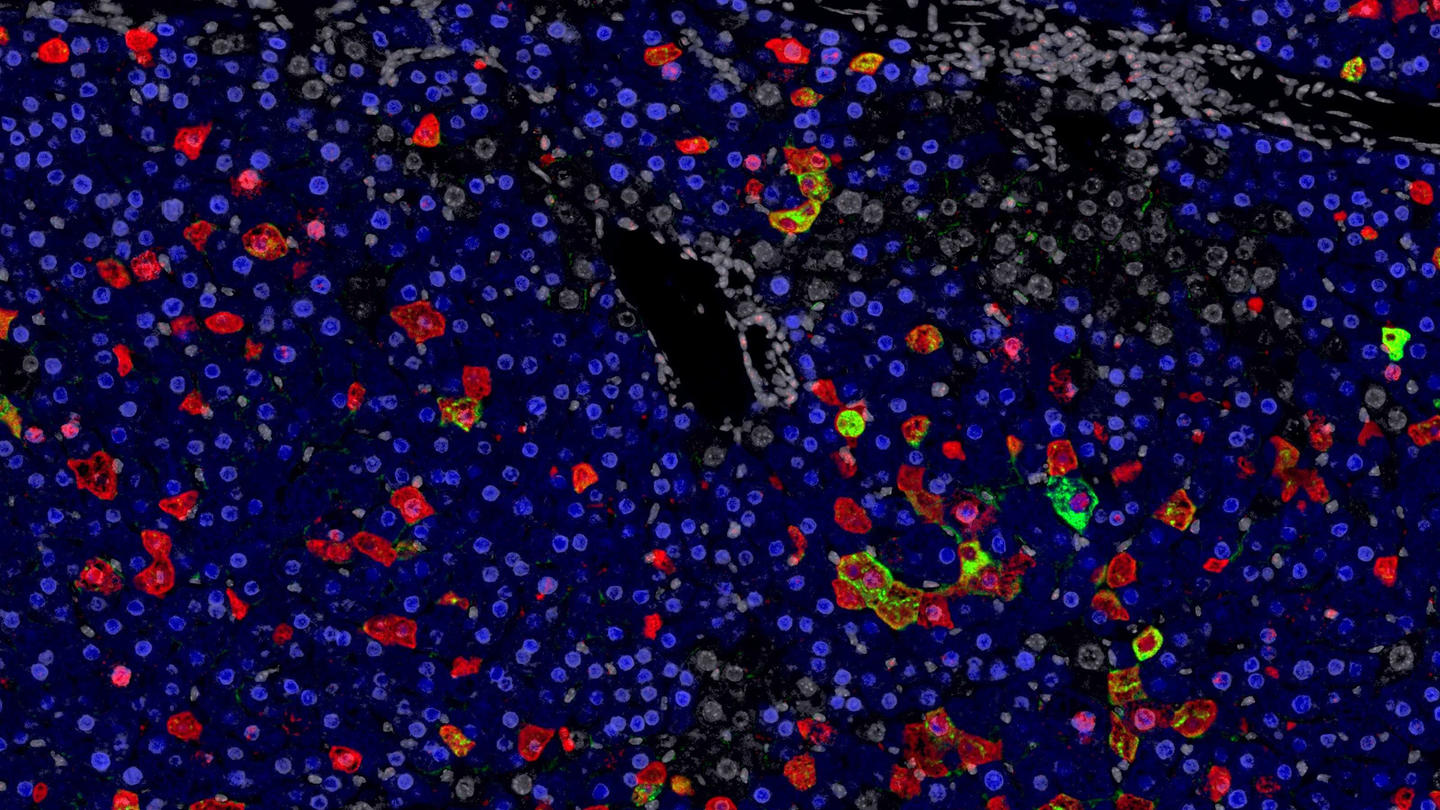
Our work is particularly focused on hepatitis viruses and vector-borne pathogens, especially flaviviruses. Collectively, hepatitis viruses infect approximately one in fourteen people worldwide, while flaviviruses are responsible for more than 400 million infections each year.

Motivated by both the substantial global health burden of these pathogens and their fascinating biology, our research centers on four major themes:
Understanding the fundamental mechanisms of viral infection and replication
Defining the host range restrictions that govern viral transmission and species tropism, work that has informed the development of innovative experimental systems, including a variety of humanized mouse models
Characterizing host responses across biological scales, from individual cells to tissues and whole organisms
Elucidating the mechanisms underlying viral pathogenesis and disease
To address these questions, we employ a diverse and interdisciplinary toolkit that includes biochemical reconstitution systems, structural modeling, genetic and functional screens, advanced virological approaches, and immunological analyses.